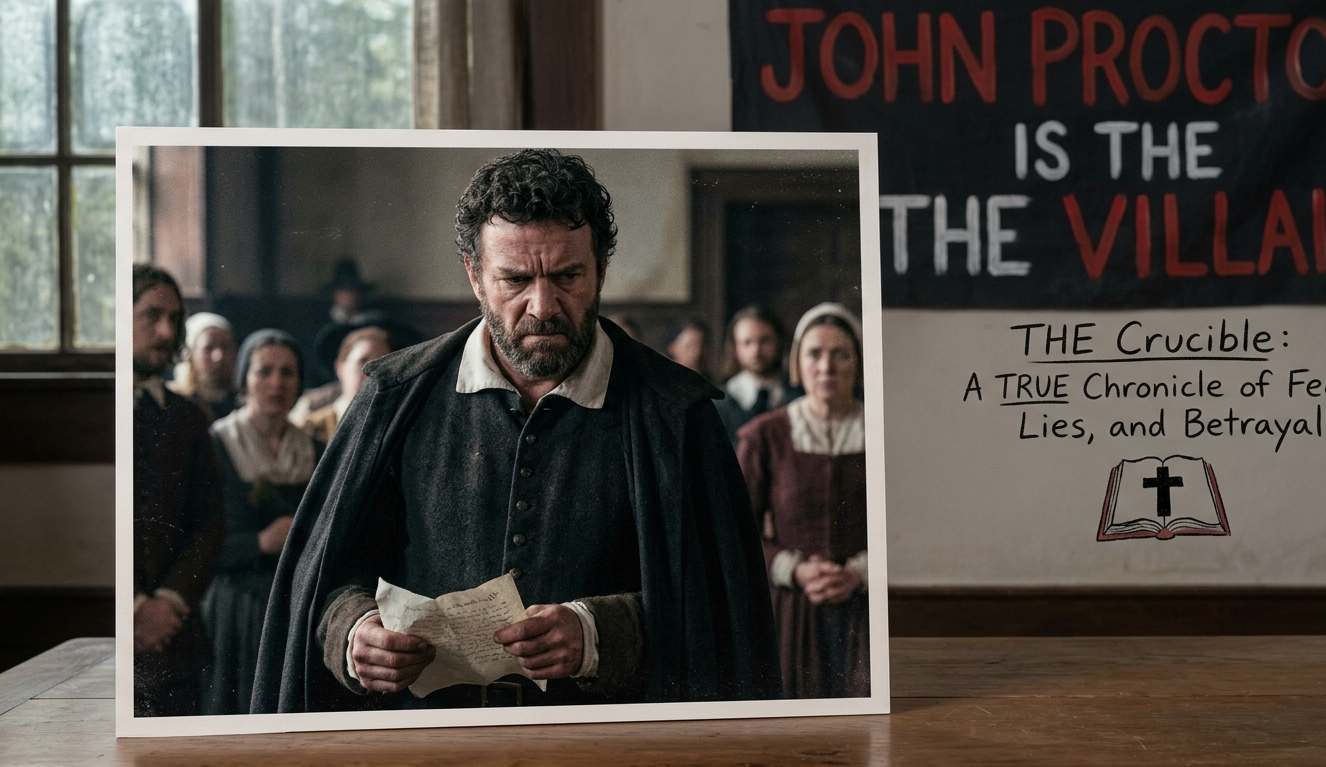
The story John Proctor Is the Villain takes place in a high school classroom in a small, rural town in Georgia in 2018. This setting is both ordinary and charged with tension, as the events revolve around a group of eleventh-grade students and their English teacher, Carter Smith. The story explores themes of power, gender, and morality while blending historical references with modern high school life. The title immediately draws attention, suggesting a twist on the well-known figure of John Proctor from The Crucible, a play about the Salem witch trials. While the play traditionally portrays John Proctor as a hero, in this modern adaptation, his character becomes a focal point for debate, and tensions rise among students and teachers alike.
Carter Smith teaches a class of six students, each with a distinct personality. Beth is the straight-A student who is thoughtful and ambitious. Nell is a new transfer student, quiet but observant. Ivy comes from a wealthy family and often displays a sense of entitlement. Raelynn is the pastor’s daughter, moral and dutiful, but caught in complicated social dynamics. Mason is slightly awkward but has a strong sense of loyalty. Finally, Lee is Raelynn’s boyfriend, struggling to make amends after cheating on her with Shelby, Raelynn’s estranged friend who returns to school mid-semester. The class’s assignment is to read The Crucible, where the historical John Proctor was convicted of witchcraft during the Salem witch trials. This sets the stage for both literary analysis and intense personal conflicts among the students.
The Classroom as a Microcosm
The high school classroom becomes a microcosm of broader societal tensions. Students not only study literature but also grapple with real-life issues. Beth forms a feminist club at school, with Mr. Smith acting as its sponsor. The club becomes a space to discuss themes like gender inequality, female sexuality, and the abuse of power, echoing the lessons of The Crucible. Ivy, however, withdraws from the club after her father faces accusations of sexual harassment during the #MeToo movement. This situation causes widespread gossip and controversy in the small town, demonstrating how personal and social issues intersect in school life.
Lee attempts to repair his relationship with Raelynn, who struggles with trust after Lee’s affair with Shelby. Miss Gallagher, the school’s guidance counselor, plays a critical role in mediating conflicts, supporting both Mr. Smith and the students. These dynamics show how high school settings can mirror adult conflicts, and how literature can spark discussions about morality, power, and justice.
Themes Explored in Class
The story uses The Crucible as a teaching tool, but it also mirrors contemporary issues. The class debates John Proctor’s character, examining whether he is heroic or flawed. This debate becomes heated when Shelby accuses Mr. Smith of sexual abuse over the past year, challenging his authority and credibility. Her confrontation forces students to confront difficult truths about trust, power, and exploitation. Through these classroom discussions, the story explores gender inequality, female sexuality, and the abuse of authority, connecting the historical witch trials to modern social issues.
Power dynamics are central to the story. Mr. Smith holds authority as a teacher, but his actions are called into question. Ivy’s withdrawal from the feminist club highlights how family influence can shape students’ engagement in social causes. Lee’s attempts to reconcile with Raelynn illustrate the personal consequences of dishonesty and betrayal. These storylines show that power, whether in literature or real life, affects relationships, choices, and morality.
Early Life and Background of the Story’s Protagonist
While the modern story focuses on a classroom, it draws heavily from the historical figure of John Proctor. Proctor was a farmer in 17th-century Salem, Massachusetts. He was known for his independence, honesty, and straightforward nature. Unlike many in his town, Proctor questioned the strict religious norms imposed by the Puritan community. His skepticism eventually led to conflict during the Salem witch trials.
The story uses this historical context to spark discussion in the high school classroom. Students analyze Proctor’s actions, debating whether he is a moral hero or a flawed individual. By examining his life, students learn about the consequences of standing against social pressure, the complexities of human morality, and the risks of false accusations. This historical perspective enriches their understanding of both literature and society.
Achievements, Records, and Legacy
John Proctor’s legacy is shaped by both historical records and literary interpretations. In history, he is remembered as one of the most prominent victims of the Salem witch trials. Proctor refused to falsely confess to witchcraft, choosing integrity over self-preservation. His execution became a symbol of resistance to oppression and the importance of personal honor.
In literature, Proctor’s story has been adapted and interpreted in various ways. Arthur Miller’s The Crucible portrays him as a tragic hero, emphasizing his moral courage and ultimate redemption. The modern story John Proctor Is the Villain reinterprets his legacy through the lens of contemporary high school dynamics, forcing students to reconsider the definition of heroism. The debates in Mr. Smith’s classroom reflect broader societal questions about morality, trust, and the consequences of one’s actions.
Conflicts and Controversies in the Story
The narrative is full of interpersonal conflicts that mirror the moral dilemmas found in The Crucible. Shelby’s return to school creates tension, as her history with Raelynn and Lee complicates social dynamics. Ivy’s family scandal brings the larger #MeToo movement into the classroom, highlighting the ways adult controversies affect students. Lee’s attempts at reconciliation with Raelynn show the difficulties of forgiveness and trust in young relationships.
The story’s climax occurs during a heated class discussion when Shelby publicly confronts Mr. Smith about his misconduct. This moment challenges students to navigate complex ethical issues. The classroom becomes a space for real-world problem-solving, where literature, history, and personal experiences intersect. These conflicts help students explore difficult questions about right and wrong, authority, and justice.
Literary Analysis of John Proctor
In the context of the story, John Proctor serves as both a literary figure and a symbol of moral ambiguity. Historically, Proctor resisted falsehood and maintained his personal integrity, even at the cost of his life. In class, students debate whether he is truly heroic or whether his flaws make him a cautionary figure. Shelby’s accusation against Mr. Smith complicates this discussion, forcing the class to consider the difference between moral courage and exploitation of authority.
The play also raises questions about gender inequality and the suppression of female voices. By analyzing Proctor’s interactions with other characters in The Crucible, students explore how societal norms limit freedom and perpetuate injustice. These discussions are mirrored in their own lives, as they navigate friendships, romantic relationships, and social expectations.
Impact on Students and Community
The story shows how literature can influence student thinking and behavior. The feminist club, debates about Proctor’s character, and discussions about contemporary scandals all encourage critical thinking. Students learn to question authority, recognize moral complexity, and consider the consequences of their actions. The story also reflects on the impact of adult scandals on young people, illustrating how social issues ripple through families, schools, and communities.
By confronting difficult topics like sexual harassment, betrayal, and moral courage, students gain insight into ethical decision-making. The story encourages empathy, responsibility, and awareness, helping students apply literary lessons to real-world situations.
The Role of Guidance and Mentorship
Miss Gallagher, the guidance counselor, plays a critical role in mediating conflicts and supporting students. Her presence ensures that difficult conversations do not escalate uncontrollably and that students have a safe space to express their concerns. She acts as a bridge between Mr. Smith and the students, helping maintain balance while navigating complex social dynamics.
Mentorship is a recurring theme throughout the story. Mr. Smith’s dual role as a teacher and sponsor of the feminist club highlights the importance of guidance, while also showing the dangers of misusing authority. The story encourages readers to consider the qualities of effective mentorship, emphasizing trust, accountability, and ethical behavior.
Modern Connections to Historical Lessons
John Proctor Is the Villain connects historical lessons to modern life. By reading The Crucible, students understand the dangers of false accusations, moral compromise, and unchecked authority. These lessons resonate in contemporary contexts, such as the #MeToo movement, high school social hierarchies, and personal relationships.
Through this modern retelling, readers see how the past informs present challenges. Historical figures like John Proctor are not merely characters in a play—they are touchstones for understanding justice, courage, and integrity. The story encourages reflection on personal values and the importance of ethical decision-making in everyday life.
Conclusion
In John Proctor Is the Villain, the classroom becomes a stage for exploring historical, literary, and contemporary issues. Students analyze John Proctor’s character, debate morality, and confront real-life challenges related to trust, authority, and gender. By combining literature with modern social dynamics, the story offers a rich educational experience that encourages critical thinking and ethical reflection.
The narrative also underscores the importance of mentorship, guidance, and open dialogue in fostering understanding among young people. By connecting historical lessons to modern controversies, the story helps students navigate moral complexity and develop a deeper awareness of their own values. Ultimately, John Proctor Is the Villain is not only an exploration of a literary character but also a reflection on human behavior, ethics, and the power of literature to illuminate contemporary life.
John Proctor is the villain, according to some interpretations in the story, yet his legacy continues to inspire debates about morality, courage, and the consequences of standing up for one’s beliefs. Whether in 17th-century Salem or a modern high school classroom, the story challenges readers to examine their own principles and the ways they navigate power, justice, and personal responsibility.
The story reminds us that understanding history and literature is not just about memorizing facts or themes—it is about applying those lessons to real-world situations, fostering empathy, and developing the courage to confront ethical dilemmas in everyday life.