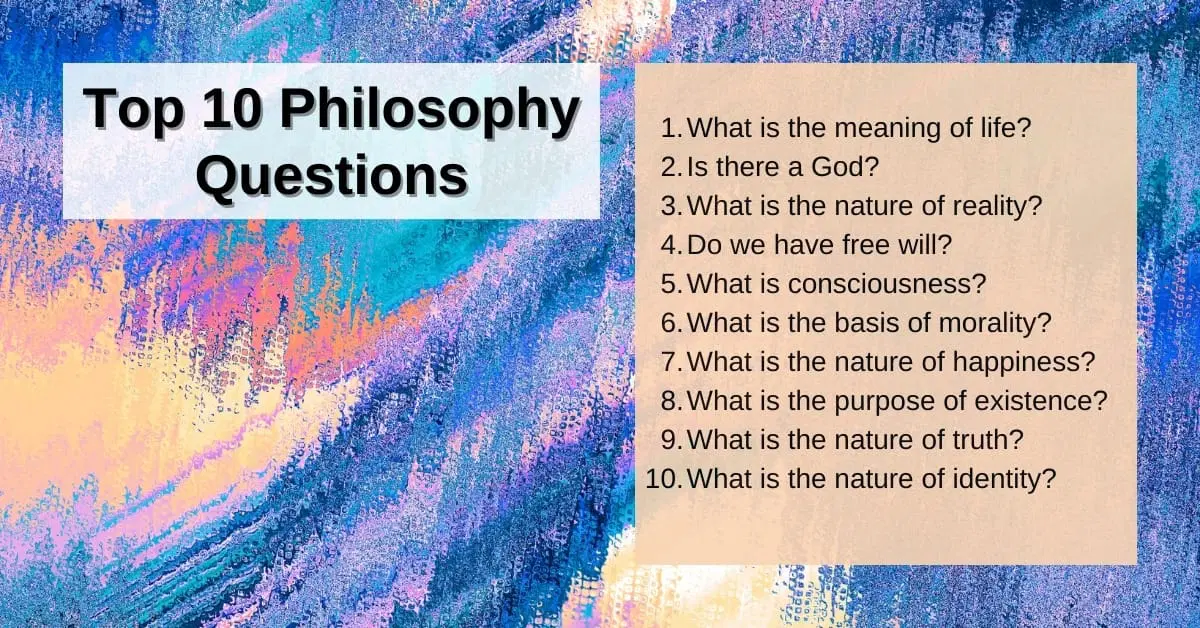
Philosophy has fascinated humans for centuries. It is a way to explore the deepest parts of our minds and understand the world around us. People have always asked big questions, questions that do not have simple answers. These questions make us think, challenge our beliefs, and inspire curiosity. In this article, we will explore some of the most intriguing philosophical questions, ranging from the nature of the mind to the possibility of artificial intelligence having feelings or creativity.
The Nature of the Mind: Are We Just Our Brains?
One of the oldest philosophical questions is whether the mind is the same as the brain or if humans possess something more, like a soul. Scientists have studied the brain for centuries, mapping neurons, understanding how signals travel, and exploring how consciousness works. Yet, even with all this knowledge, there is still debate. Some philosophers argue that consciousness is simply the result of chemical and electrical processes in the brain. Others believe that our thoughts, emotions, and awareness suggest that we have a soul—a part of us that is separate from our physical body.
This question challenges us to think about what it really means to be human. Are we purely biological machines, or is there something more mysterious and unique inside us? The answer may never be clear, but exploring the question encourages reflection on life, death, and what makes us who we are.
The Possibility of Artificial Intelligence Thinking and Feeling
In today’s world, computers can do amazing things. They can solve complex problems, recognize faces, write stories, and even play chess better than humans. But can computers really think, or even fall in love? This is another major philosophical question. Thinking requires not only processing information but also understanding, awareness, and judgment. While AI can mimic thinking, many philosophers argue that it does not truly “experience” thoughts the way humans do.
When it comes to emotions, the question becomes even more complex. Can a computer feel happiness, sadness, or love? Current technology does not allow emotions in machines, but as AI continues to evolve, some people wonder if this will ever be possible. Philosophers debate whether emotions are purely chemical processes in the human brain or if they involve something deeper that machines can never replicate.
Creativity in Humans and Machines
Creativity is often seen as a unique human ability. Artists, writers, and musicians create works that inspire, challenge, and move people. But can computers be creative? Some AI systems can generate art, music, or poetry that looks and sounds original. Yet, the question remains: is this true creativity, or just the result of analyzing patterns and rules?
Philosophical questions about creativity force us to consider what it really means to create something. Is creativity just combining ideas in new ways, or does it require intention, emotion, and personal experience? This discussion touches on the heart of what makes humans special and whether machines might one day share that uniqueness.
Early Life and the Background of Philosophical Inquiry
Philosophy did not appear overnight. It began with early thinkers trying to understand the world and their place in it. Ancient philosophers like Socrates, Plato, and Aristotle asked questions about life, morality, and knowledge. They explored ideas about truth, beauty, justice, and the soul. These thinkers laid the foundation for thousands of years of debate and inquiry.
Socrates, for example, encouraged questioning everything. He believed that asking the right questions was more important than having all the answers. Plato, his student, explored the nature of reality and the ideal forms of things, suggesting that what we see in the world is only a reflection of something greater. Aristotle focused on understanding logic, ethics, and the natural world. Together, these early philosophers shaped the way humans think and approach problems, inspiring generations of scholars, scientists, and thinkers.
Modern Philosophical Questions
Today, philosophical questions continue to evolve. Technology, science, and society have introduced new challenges. Questions about AI, the environment, human rights, and the meaning of life are all part of modern philosophy. People ask whether technology helps or harms humanity, whether artificial intelligence could replace human judgment, or if society is progressing ethically.
Ethics is a major area of modern philosophical inquiry. Questions about what is right or wrong, fair or unfair, guide decision-making in daily life. For example, if self-driving cars are involved in accidents, how should responsibility be assigned? These questions are not just theoretical—they have real-world consequences.
Achievements, Records, and the Legacy of Philosophical Thinking
Philosophy has left a lasting impact on human history. From politics to science, art to law, philosophical thinking has shaped societies and cultures. Many of the rights and freedoms we enjoy today were influenced by philosophical ideas about justice, equality, and individual liberty. Philosophers like John Locke, Immanuel Kant, and Jean-Jacques Rousseau explored the nature of society, morality, and government, inspiring revolutions, constitutions, and laws that protect human rights.
In science, philosophy has guided inquiry and critical thinking. The scientific method, for example, is rooted in philosophical principles of questioning, observation, and reasoning. Many scientific discoveries began as philosophical questions about the nature of reality, matter, and life itself.
Even today, philosophical questions encourage innovation. Scientists, engineers, and thinkers use philosophy to explore possibilities, challenge assumptions, and expand the boundaries of knowledge. From understanding consciousness to creating artificial intelligence, philosophy remains central to progress and exploration.
Why Philosophical Questions Matter
You might wonder why asking questions that do not have clear answers is important. Philosophical questions matter because they help us think deeply, reflect on our values, and understand the world better. They challenge assumptions and encourage open-mindedness. By exploring these questions, people can develop better critical thinking, empathy, and problem-solving skills.
Moreover, philosophical questions connect us to the human experience. They explore what it means to live, love, learn, and die. They push us to consider our responsibilities to ourselves, others, and the world. Whether we are pondering the existence of a soul or debating whether a computer can feel love, these questions encourage reflection on our place in the universe.
Examples of Thought-Provoking Philosophical Questions
To illustrate the power of philosophical thinking, here are some examples of questions that have fascinated thinkers for centuries:
- Is the mind the same as the brain, or do we have souls?
- Can computers think, or fall in love?
- Can computers be creative?
- What is the meaning of life?
- Do we have free will, or is everything predetermined?
- What is truth, and can we ever know it completely?
- Is morality absolute or relative to culture?
- Does happiness depend on external conditions or inner perspective?
- Can we ever truly know other people’s experiences?
- Is there a purpose to suffering?
These questions may never have final answers, but the act of exploring them enriches our lives, making us more thoughtful, curious, and aware.
Philosophical Questions in Everyday Life
Philosophical questions are not just for scholars or experts—they are relevant in everyday life. People encounter moral decisions, dilemmas, and uncertainties all the time. For instance, deciding whether to tell the truth when it might hurt someone, considering environmental choices like recycling or energy use, or reflecting on personal goals and happiness are all part of philosophical thinking.
By considering these questions, people can live more intentional and meaningful lives. It helps in understanding others, building stronger relationships, and making thoughtful decisions. Philosophy teaches patience, curiosity, and the importance of asking why—not just how.
Legacy of Philosophical Inquiry
The legacy of philosophical inquiry is vast. It has influenced education, politics, law, science, art, and culture. Philosophical questions encourage innovation, challenge traditions, and inspire new ways of thinking. From ancient Greece to modern universities, philosophy has shaped human knowledge and continues to guide progress.
Even though philosophical questions often have no definitive answers, they create a framework for exploration. They remind us that life is complex, reality is nuanced, and understanding requires thought and reflection. In this way, philosophy is both timeless and continuously evolving, helping each generation to see the world with fresh eyes.
Conclusion
Philosophical questions are an essential part of human curiosity and intellectual growth. They push us to examine the mind, consider the possibilities of artificial intelligence, explore creativity, and understand the deeper aspects of life. From the early thinkers like Socrates and Plato to modern discussions about AI and ethics, philosophy encourages questioning, reflection, and critical thinking.
While these questions may not have simple answers, the pursuit of understanding itself is valuable. It teaches us to think deeply, consider multiple perspectives, and appreciate the complexity of existence. Whether you are pondering the nature of consciousness, the creativity of machines, or the meaning of happiness, philosophical questions connect us to the timeless human journey of seeking wisdom, knowledge, and insight.
By engaging with these questions, we not only explore the world but also explore ourselves. The journey of asking, thinking, and reflecting is what makes philosophy truly powerful, enriching, and enduring.